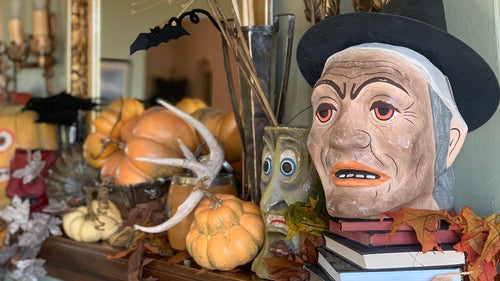




The most memorable October rooms rarely look like they were decorated in one afternoon. They feel assembled over time: a grinning papier-mâché cat found on a favorite shelf, a luminous pumpkin tucked beside old books, a witch with wonderfully exaggerated features presiding over the mantel. That is the particular magic of retro Halloween decorations. They bring back the playful, slightly strange character of mid-century Halloween while giving a home the visual richness of a true collection.
Retro style is not about making a room look dusty or treating nostalgia as a rulebook. It is about choosing pieces with personality: saturated orange, inky black, chartreuse green, hand-painted details, expressive faces, and silhouettes that could not be mistaken for ordinary seasonal merchandise. A well-styled display feels festive from the doorway and offers more to admire the closer guests get.
What Makes Retro Halloween Decorations So Special?
Vintage-inspired Halloween design has a charming tension that modern minimalist décor often misses. It can be cheerful and eerie at once. A smiling jack-o'-lantern may have triangular eyes and a crooked grin; a black cat may look more mischievous than menacing. Witches, moons, skeletons, and devils are rendered with theatrical color and a touch of camp, making them wonderfully suited to a home that takes entertaining seriously without taking itself too seriously.
The appeal also lies in scale and detail. A small glass ornament can shimmer under candlelight. A sculptural figure can anchor a console table. A group of paper decorations can turn a plain doorway into a scene. Each object plays a role, which is why this style rewards collecting rather than buying a single matching set.
For hosts, retro Halloween is especially generous. It gives guests something to talk about before the first cocktail is poured. For collectors, it offers endless room to refine a point of view: glamorous black-and-gold, storybook orange and cream, old-world witches, or a full moonlit menagerie of cats and bats.
Start With a Halloween Color Story
The quickest way to make a collection look intentional is to choose a color story before choosing a surface. Traditional orange and black remain irresistible, but they are far from your only option. Black, cream, and antique gold create a more dramatic, candlelit mood. Orange, mustard, and olive green bring a spirited 1950s kitchen-party feeling. Deep plum paired with copper offers a richer, more mysterious expression for a formal dining room.
There is no need to ban every other color. The goal is repetition, not rigid matching. Let orange appear in a pumpkin, a ribbon, and the glow of a taper candle. Repeat black through cats, bats, pedestal bowls, or a striped runner. When colors recur at different heights and in different materials, the display feels layered rather than busy.
A useful rule is to select one dominant color, one supporting color, and one metallic or neutral accent. This leaves plenty of room for the joyful oddities that make retro décor so collectible, without letting the scene drift into visual clutter.
Build a Display Like a Small Theater Set
The strongest Halloween vignettes have a sense of foreground, background, and a leading character. Begin with an anchor piece that immediately establishes the scene: a large pumpkin figure, a witch, an oversized black cat, or a dramatic moon. Place it slightly off-center. Symmetry can be elegant, but a little asymmetry gives retro Halloween styling more movement and surprise.
Next, add supporting pieces in varied heights. Stack a few old-looking books beneath a figure, use a cake stand to lift a smaller pumpkin, or set a glowing object near the back of the arrangement. Glass, papier-mâché, ceramic, and paper each reflect light differently, so combining materials creates the depth that makes a mantel or entry table feel magical after dark.
Then give the eye a few tiny discoveries. A miniature skeleton peeking from behind a bowl, a bat resting on a candlestick, or a small ornament hung from a branch can make the arrangement feel alive. These details should be delightful, not random. If a piece does not support your color story or your Halloween narrative, save it for another corner of the house.
This approach works beyond the mantel. An entry console can become a haunted welcome, a bar cart can lean into cocktail-hour glamour, and a dining sideboard can carry a more elegant harvest-meets-Halloween mood. Even a narrow shelf can feel abundant when it has one focal piece, two supporting forms, and a small pool of warm light.
Let Lighting Do Some of the Decorating
Harsh overhead light can flatten even the most beautiful collectible display. Retro Halloween decorations come alive with a softer glow: vintage-style bulbs, flameless candles, a small lamp with a warm shade, or strings of richly colored lights. The lighting should reveal the colors and expressive faces of your pieces, not turn every corner into a haunted-house attraction.
If you display treasured paper figures or delicate vintage-style materials, keep real flames at a safe distance. Flameless tapers and LED lights are especially useful for long evenings of entertaining, where the atmosphere matters but vigilance should not become part of the party.
Mix Collectible Pieces With Everyday Objects
A convincing seasonal room does not require replacing everything you own. In fact, retro Halloween feels more personal when it settles into the life already happening in your home. Use your favorite barware for a jewel-toned cocktail, fill a pewter bowl with wrapped candies, or place a pumpkin figure beside framed family photographs. The contrast between everyday objects and theatrical Halloween characters is part of the charm.
The trick is to edit with confidence. A table crowded with unrelated signs, plastic spiders, novelty sayings, and oversized props can obscure the beauty of a special piece. Let one or two collectible figures have breathing room. Surround them with materials that add texture - velvet ribbon, dark linen, brass, wood, polished glass - rather than competing for attention.
This is also where investment pieces earn their place. A beautifully made figure or hand-finished ornament does not need an army of accessories to make an impact. It can return every year in a new setting: on a bar cart one season, in a dining room centerpiece the next, then tucked into a dramatic shelf display. That flexibility is what turns seasonal shopping into tradition-building.
Choose What to Collect, Not Just What to Buy
The difference between a decorated house and a collection is a point of view. Before adding another piece, consider what you want your Halloween world to be known for. Perhaps you are drawn to moon-faced characters and celestial details. Maybe black cats are your signature, or you prefer expressive witches in towering hats. A collector's theme can be broad enough to evolve while still making each new find feel connected.
Quality matters, but it does not always mean every object must be precious. A glamorous hand-painted centerpiece may sit beautifully alongside a whimsical paper accent. The trade-off is durability and display location. Fragile, detailed pieces belong where they can be admired without being knocked over, while more casual decorations can greet trick-or-treaters, children, and party guests.
Limited seasonal pieces deserve a little planning. If you know you want a particular motif, begin looking early, especially when exclusive releases and small-batch finds are involved. Timothy De Clue Collection approaches Halloween with this collector's eye, pairing nostalgic forms with the kind of expressive detail that makes a piece feel worth bringing out year after year.
Give Your Display a Reason to Change
One of the pleasures of collectible décor is that it never has to be arranged exactly the same way twice. Start October with a few early autumn pieces, then introduce the witches, bats, and bolder colors as Halloween approaches. For a party, move your most animated figures into the entertaining areas and let the entryway make the first impression. Afterward, keep a few favorite pumpkins and moody lights in place through the final crisp days of fall.
Photograph arrangements you especially love before packing them away. Not to copy them perfectly next year, but to remember what worked: the scale of a centerpiece, the colors that glowed at night, the small figure guests kept noticing. Store fragile pieces individually, keep original boxes when possible, and label by theme rather than simply by room. Your future self will be grateful when October arrives and the search for the black cat collection takes minutes instead of an afternoon.
The best Halloween display is not the one with the most decorations. It is the one that feels unmistakably yours: a little theatrical, beautifully layered, and ready to welcome anyone who pauses long enough to admire the details.
0 comments