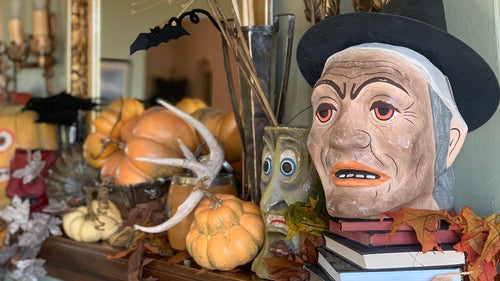
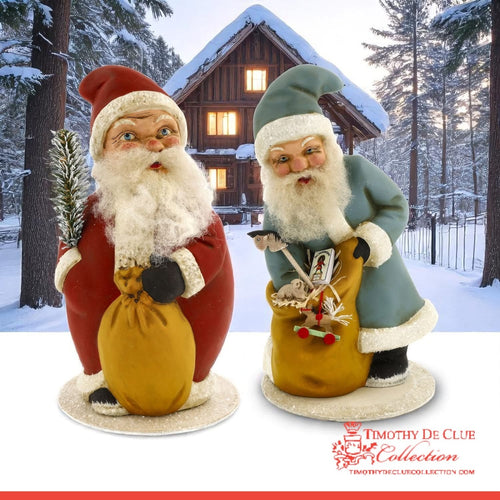



A painted Santa with a frosted beard, a watchful angel in a shimmering gown, or a wonderfully stern Belsnickel can change the feeling of a mantel in seconds. German papier mache figures have that rare gift: they make a holiday display feel collected rather than simply decorated. Their hand-finished surfaces, storybook expressions, and old-world silhouettes bring texture and personality to spaces that may otherwise lean too polished.
For collectors, that is the appeal. These are not anonymous seasonal objects meant to disappear into a storage bin after December. The finest examples carry a sense of occasion, whether displayed in a Christmas village, gathered around a nativity, or placed front and center on a beautifully dressed holiday table.
Why German Papier Mâché Figures Feel So Special
Papier mâché has a charming contradiction at its core. It begins as a modest material, traditionally created with paper pulp or layers of paper and paste, yet skilled makers transform it into figures with extraordinary visual presence. A well-made piece can have sculptural folds in its clothing, a face full of character, and hand-painted details that reward a closer look.
German holiday craftsmanship is particularly loved for its imaginative use of familiar Christmas characters. Santas may appear regal, woodland-inspired, toy-laden, or delightfully peculiar. Angels can feel celestial and glamorous rather than overly sweet. Nativity figures often balance reverence with warmth, creating a scene that feels intimate enough for a family home while still looking strikingly composed.
The handmade quality is part of the magic, not an imperfection to be corrected. Slight shifts in paint, glitter placement, facial expression, or posture can make one figure feel distinct from the next. For a collector, those subtle variations are evidence of a decorative tradition with a human hand behind it.
The Difference Between Handmade Character and Wear
When choosing German papier mache figures, it helps to distinguish intended character from condition concerns. Antiqued finishes, visible brushwork, soft crackle effects, and uneven glitter may be part of a figure's designed charm. They lend an heirloom atmosphere that pairs beautifully with vintage-style ornaments, candlelight, and richly layered greenery.
Actual damage is different. Look closely for crushed areas, splits in the form, flaking paint that exposes raw material, water staining, or loose decorative elements. Older pieces may naturally show gentle signs of age, and some collectors love that patina. Still, a figure should feel structurally sound and visually intact enough to enjoy without worry.
Scale deserves equal attention. A substantial Santa makes a spectacular anchor on a sideboard or beneath a tree, while a smaller angel may be exactly what a bookshelf vignette needs. Before falling for a piece online, consider where it will live and leave room for its silhouette, wings, staff, lantern, or other dimensional details to shine.
How to Build a Display Around Papier Mâché
These figures look their best when they have a setting, not just a spot. Start with the story you want your display to tell. A woodland Santa with deep reds and greens might belong beside bottle-brush trees, velvet ribbon, and warm white lights. A celestial angel can bring drama to a mantel layered with gold ornaments, mercury-glass accents, and taper candles in hurricane holders.
For a nativity, restraint often creates the most beautiful result. Let the figures remain the focal point, using a simple wood base, a sweep of mossy green garland, or a few miniature trees to establish the scene. Too many tiny accessories can make a meaningful arrangement feel crowded. A little negative space allows the sculptural details to read from across the room.
Height is what gives a collection movement. Place taller figures toward the back, then tuck smaller companions in front. Use stacked books covered in festive paper, low risers, or sturdy boxes beneath a table runner to create levels without calling attention to the mechanics. Grouping pieces in odd numbers can feel organic, but symmetry has its place too, especially when framing a mantel clock, mirror, or doorway.
Color can either unite the scene or make it joyfully maximalist. If you favor a refined palette, choose figures that repeat two or three dominant tones, such as ivory, evergreen, and gold. If your Christmas style is exuberant, let a candy-colored Santa, a silver-winged angel, and a crimson-robed king coexist. The common thread can be finish rather than color: hand-painted surfaces, a dusting of mica, or a shared old-world mood.
A Collector's Approach to Choosing Pieces
The temptation is to purchase every charming figure at once. That can be fun, but a more intentional approach creates a collection that grows in meaning each season. Choose a first piece with enough visual authority to stand alone, then add companions that expand its story over time.
Some collectors begin with one iconic Santa and build a Christmas mantel around him. Others collect angels in varied heights, or choose a nativity as the heart of their December decorating. A third approach is to collect by mood: traditional red-and-green Christmas, woodland folklore, celestial glamour, or snowy winter white. None is more correct. The best collection is one you want to unpack with anticipation every year.
Limited seasonal releases can add excitement, especially when a particular figure speaks to your personal style. Yet scarcity alone is not a reason to buy. Ask whether the piece has a place in your home, whether it complements what you already own, and whether you will enjoy seeing it beyond one holiday season. The most satisfying finds earn their place through delight, not urgency.
At Timothy De Clue Collection, the joy is in discovering pieces that feel uncommon and full of decorative possibility. A special figure can become the detail guests ask about first, then remember long after the party is over.
Where These Figures Belong Beyond the Mantel
A mantel is a natural stage, but it is far from the only option. Place a single figure on an entry console to greet guests with immediate holiday spirit. A pair of angels on a dining room sideboard can bring height and sparkle to an entertaining space without competing with the table setting. On a bookcase, a Santa tucked among favorite holiday books feels personal and wonderfully unexpected.
Consider the rooms where people linger. A small figure near the coffee bar gives early December mornings a dose of ceremony. A nativity on a protected console in the living room invites quiet reflection. In a guest room, one festive character beside a bedside lamp can make visitors feel thoughtfully welcomed.
Avoid placing papier mâché in areas that are damp, excessively hot, or exposed to direct sunlight for long periods. Kitchens and bathrooms can be challenging unless the display is well away from steam and splashes. If you use candles nearby, keep a generous, safe distance and never leave flames unattended. LED candlelight provides a beautiful glow with less concern around delicate finishes.
Caring for Papier Mâché Through the Years
Papier mâché rewards gentle care. Dust figures with a soft, dry brush or clean microfiber cloth rather than water, household cleaners, or polishing products. Moisture can affect both the paper-based structure and painted surface, while vigorous rubbing may loosen delicate mica, glitter, or applied trim.
When the season ends, wrap each figure individually in acid-free tissue or unprinted white tissue, then place it in a sturdy box with enough padding to prevent movement. Avoid packing material that can snag metallic details or transfer color. Store boxes in a dry, temperature-stable interior closet rather than an attic, garage, or basement where dramatic swings in heat and humidity can take a toll.
Keep original boxes when available, especially for collectible pieces with unusual forms. Photograph your favorite arrangements before packing them away. Next year, those photos provide an easy starting point, while leaving plenty of room for a new arrival to make the display feel fresh.
Let the Collection Become Part of the Tradition
The most memorable holiday homes do not look assembled in one afternoon from a single store shelf. They reveal preferences, stories, and little moments of delight built over time. German papier mache figures are especially lovely in that role because they invite both admiration and imagination.
Choose the Santa whose expression makes you smile. Bring home the angel that catches the candlelight just right. Set the nativity where your family naturally gathers. With thoughtful placement and gentle care, these expressive figures can become part of the ritual itself: the treasured objects that signal the season has truly arrived.
0 comments