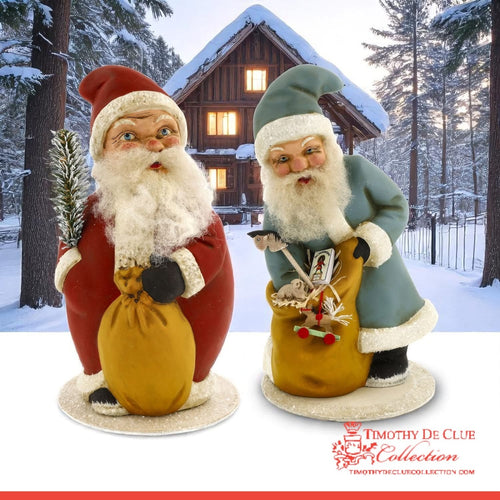



A tree dressed in European Christmas ornaments has a different kind of presence. It glitters, certainly, but it also tells stories: a lacquered mushroom tucked near the lights, a jewel-toned finial catching the room from across the table, a cheerful Santa with the expressive face and tiny details that make guests lean closer. These are not filler decorations. They are small works of holiday theater, chosen one by one and brought out year after year.
For collectors, that is the real appeal. European ornaments carry the feeling of a holiday market, an old-world parlor, a family trunk opened on the first decorating day of the season. Their magic comes from color, craftsmanship, and a delightfully generous point of view: more shine, more character, more reasons to linger by the tree.
What Makes European Christmas Ornaments So Special
The best European ornaments are recognizable before you ever see a label. Hand-blown glass has a lightness and irregularity that machine-made pieces rarely replicate. The surface may be richly painted, dusted with mica, covered in tiny glass beads, or finished in radiant metallic color. Even ornaments made in a series retain a sense of the maker's hand.
Germany is especially central to the story. Long associated with glass ornament production and Christmas traditions, German workshops helped establish the decorative vocabulary many of us now consider classic: fruits and vegetables, angels, Santas, birds, nutcrackers, winter animals, and graceful finials. The forms can be wonderfully fanciful, yet their construction is serious. A beautifully made glass ornament has dimension, balance, and a finish that rewards a closer look.
European holiday decorating also tends to embrace abundance. Instead of treating the tree as a restrained backdrop, it becomes the room's sparkling main event. Colors are layered. Shapes are mixed. Sentimental pieces sit beside glamorous new discoveries. This approach gives a tree personality, and it leaves room for a collection to evolve over decades.
Start a Collection With a Point of View
A memorable ornament collection does not need to match perfectly. In fact, too much uniformity can make a tree feel more like a catalog page than a lived-in tradition. The goal is cohesion, not sameness.
Start by deciding what you want people to notice first. Perhaps it is old-world Christmas in rich red, gold, and forest green. Perhaps it is a confectioner's fantasy of peppermint, pink, silver, and sugared finishes. A woodland tree can mix owls, foxes, acorns, and mushrooms with deep velvet ribbon. A classic collector's tree might lean into Santas, angels, fruit, and glittering finials in saturated jewel tones.
Then build in layers. Large statement ornaments establish visual rhythm, especially on the lower and middle branches. Medium-size figures fill the body of the tree. Smaller ornaments, icicles, and delicate shapes add sparkle at the ends of branches where they can catch the light. A few dramatic pieces placed slightly inward create depth, so the tree looks lavish rather than simply crowded.
It is worth choosing a color story, but allow one unexpected accent. Cobalt among traditional red and gold, for example, can feel magnificent. A flash of chartreuse in a candy-colored tree adds a little mischief. The most enchanting collections usually have a surprise tucked into their palette.
Collect by motif, not just by color
Color makes an immediate impression, while motifs make a collection personal. A host may collect champagne bottles, oysters, lemons, and pastries for a bar-cart-inspired tree. A traveler might favor landmarks, hot-air balloons, and storybook vehicles. Animal lovers can create a menagerie of glass dogs, birds, cats, and woodland creatures.
Motif collecting is also a thoughtful way to mark life events. Choose a new ornament for a first home, a wedding, a beloved pet, an unforgettable trip, or the arrival of a child. Over time, the tree becomes less about a single decorating scheme and more about the people and occasions that shaped it.
The Pieces That Create Instant Drama
Not every ornament needs to be rare or elaborate, but a few exceptional shapes can transform the entire display. Look for pieces with silhouette and scale: long finials, oversized fruits, elaborate Santas, fanciful sea creatures, reflective balls, and figural ornaments with expressive details.
Finials deserve special attention. Their elongated forms break up the roundness of traditional balls and bring an almost chandelier-like elegance to a tree. Hang them where they have room to sway gently, not on crowded branch tips. A group of three placed at different heights can make even a modest tree feel far more considered.
Reflective ornaments are another collector favorite. Indented reflectors, faceted surfaces, and metallic finishes amplify the warm glow of string lights. They work especially well deeper inside the tree, where they bounce light outward through the branches. If your lighting is warm white, gold, ruby, amber, and silver glass will look particularly rich. Multicolor lights invite brighter combinations of turquoise, pink, purple, and green.
There is a trade-off, of course. A tree full of highly detailed ornaments can become visually busy if every piece competes for attention. Give the eye places to rest with a few simple glass balls, velvet bows, or uncluttered areas of greenery. The contrast makes your most extraordinary ornaments look even more extraordinary.
How to Style Them Beyond the Tree
European glass ornaments are too charming to disappear into storage after one month of display. A small grouping can bring holiday spirit to places a full tree cannot reach.
Fill a footed glass bowl with sturdy ornaments in one color family for a glamorous entry table. Hang a single special ornament from a cabinet knob, a window latch, or a ribbon on a dining-room mirror. Place a few substantial glass pieces among evergreen cuttings on a mantel, keeping them safely away from open flame and busy pet traffic. For a holiday table, use ornaments as part of the centerpiece rather than at each place setting, where delicate glass may be handled too often.
A tabletop tree is ideal for more delicate or themed pieces. It gives a small collection its own stage and lets you enjoy ornaments that might be overlooked on a twelve-foot tree. Consider one in a guest room, on a bar, or beside the breakfast table. A tiny tree covered entirely in glass mushrooms or candy ornaments can be as memorable as the main event.
Caring for Collectible Glass Ornaments
The same delicacy that makes hand-blown glass so beautiful calls for a little care. Use ornament hooks that close securely, or tie a small ribbon loop through the cap when displaying especially precious pieces. Keep heavy ornaments close to the trunk on substantial branches, and reserve fragile finials for locations where they will not knock against one another.
When the season ends, wrap ornaments individually in acid-free tissue paper and store them in a compartmentalized box. Avoid packing them tightly or placing heavy items on top. A cool, dry interior closet is kinder to finishes than an attic, garage, or damp basement, where dramatic temperature changes can affect paint, glitter, and adhesive details.
Before storing, take a few photographs of your tree and make a quick note of any ornaments with a story. It sounds simple, but years from now, those notes become part of the collection's pleasure. You will remember which bright little bird came from a first Christmas together and which extravagant finial was the splurge that started it all.
Choose Pieces You Will Be Glad to Unwrap
The most satisfying European ornament collections are never finished. They grow slowly, with room for a glorious new discovery each season. Buy the piece that makes you smile immediately, the unusual figure your guests will ask about, the color that makes your existing favorites glow.
At Timothy De Clue Collection, that spirit of discovery is at the center of holiday decorating: ornaments selected not merely to fill branches, but to become part of the celebration. This season, choose one beautiful piece with a story waiting to begin, then give it pride of place where the lights can find it.
0 comments